From Quantity to Quality: A Mature Touring Market
While discussions often focus on new vehicle sales figures, demand for high-end motorcycles, gear, and experiential services is growing on the ground, suggesting that the market’s focus is shifting from quantity to quality and experiential value. For example, long-established motorcycle gear manufacturer Kushitani has opened its first store in South Korea and is renovating several flagship stores, reflecting the expanding demand for high-end touring gear.
It can be said that riders, primarily in their 50s and 60s, form a core group of consumers with strong spending power—some owning motorcycles priced over 3 million yen and investing generously in regional lodging and dining. Hotels are also responding by taking steps such as establishing dedicated motorcycle parking areas. Motorcycles have shifted from their former role as infrastructure for commuting to school or work to becoming high-value-added “hobby items centered on touring.”
Unlike the motorcycle market of the past, the growing number of riders who select high-quality motorcycles and gear and are willing to pay for the experience has strengthened the motorcycle’s presence as a market with a strong emphasis on hobbyism.
The Government Takes Action: The Motorcycle Tourism would be The Key to “Regional Revitalization” and “Solving Overtourism”
As the concentration of tourism in Kyoto and Tokyo becomes a social issue, the government is rushing to disperse the flow of people to rural areas. The mobility of motorcycles—which can navigate compact/narrow streets—makes them a powerful tool for secondary transportation in rural areas where public transit does not reach.
The Ministry of Economy, Trade and Industry is now asking the motorcycle industry not only to report on new vehicle sales figures but also to “visualize” the economic impact riders have on local economies through spending on lodging, dining, gasoline, and ETC tolls. As a result, motorcycles are receiving unprecedented support in addressing the national challenges of regional revitalization and tourism dispersion.
Professor Tsunehiro Hayashi of Okayama University of Science, a leading authority on motorcycle tourism research, provides academic backing for this trend. Professor Hayashi points out that, in addition to motorcycles functioning as secondary transportation in rural areas, “What is important in tourism is staying overnight, eating local specialties, and buying souvenirs. A key characteristic of motorcycle tourists is their high per-person spending.” Furthermore, he notes that motorcycles’ mobility allows them to access narrow roads and mountainous areas, making them an extremely effective means of dispersing crowds from tourist destinations exhausted by overtourism to rural areas. He also states that “visualizing” the economic ripple effects of motorcycle tourists—which are difficult to quantify—is the key to motivating local governments and placing motorcycle tourism on the official agenda of regional policy.
From “Touring” to “Tourism”: JTB’s Entry and “Monetizing Routes”
In the past, there was a culture where motorcycle shops would take customers on touring trips, but such opportunities have been declining. Taking their place is “motorcycle tourism,” where a guide accompanies participants and packages routes with unique experiences. Unlike “touring,” where individuals ride freely on their own, these trips incorporate places, cuisine, and cultural experiences known only to the guide, allowing travelers to discover the charms of Japan they might not have noticed on their own.
The “Princess Tour,” a program for women organized by Moto Tours Japan—a travel agency specializing in motorcycle travel https://www.mototoursjapan.com—
includes cultural experiences such as visits to a Hakone marquetry workshop in addition to riding. By experiencing the artisans’ skills firsthand, travelers come to understand the value of the crafts and purchase high-quality items to take home. This virtuous cycle of “understanding and consuming” is the very essence of how motorcycle tourism can contribute to the local economy.
Major travel industry player JTB has also taken note of this trend and signed a Memorandum of Understanding (MOU) with Moto Tours Japan in March 2026, aimed at expanding the inbound tourism market. The combination of JTB, which excels in attracting customers and making travel arrangements, and Moto Tours Japan, with its expertise in motorcycle travel, symbolizes the beginning of a full-scale convergence between the motorcycle and travel industries. At the 53rd Tokyo Motorcycle Show 2026, this partnership also attracted attention among industry insiders as a “historic step marking the full-scale entry of a major player in the travel industry into motorcycle travel.”
Moving forward, the shift from branding “spots” to branding “routes” will become increasingly important. In the U.S., “Route 66” has established itself as a story rooted in the history of the frontier and a distinct lifestyle, while traversing the European Alps is seen as a path to self-realization. In Japan as well, the key to contributing to local communities lies in branding routes in areas like Aso and Hokkaido along with their stories, and in transforming traditions, food culture, and the four seasons into “experiential value.”
The value of motorcycle travel is higher than ever, every single action—from riding and staying overnight to dining and experiencing local culture—is driving this massive wave of change. Motorcycle travel is no longer just a hobby; it is becoming an integral part of fostering a new culture of travel across Japan.
Furthermore, a lecture on motorcycle tourism is scheduled for the “14th BIKE LOVE FORUM in Kumamoto/Ozu,” set to take place on Friday, September 11, 2026, in Kumamoto Prefecture. This indicates that the movement is not a passing fad but is spreading as a trend across the entire industry.
2. What is the appeal of Japan motorcycle tours from the point of view of foreigners visiting Japan?
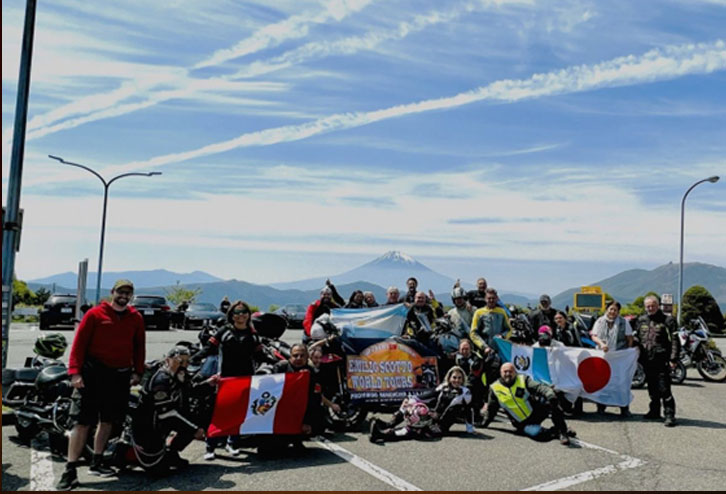
Fuji at Hakone Daikanzan, the first day of the tour.
Just as touring motorcycles in Europe, the U.S., and other foreign countries was once a dream come true for Japanese riders, so too was touring motorcycles in Japan a dream come true for foreign riders. However, the situation seems to have changed in recent years.
Perhaps it is the deregulation of the Corona measures, or perhaps it is the effect of the weak yen, but it seems that the demand for motorcycle rental + tourism by foreigners visiting Japan has been increasing over the past few years.
What kind of riders are gathering and how are they enjoying Japan? We accompanied a group of foreign visitors to Japan on a motorcycle tour undertaken by MOTO TOURS JAPAN Corporation, a travel agency specializing in motorcycle touring and an affiliate of the Kizuki Group, well known for its rental 819, to find out the motivations and psychology of the participants.
Increased use of motorcycle rentals has been accompanied by a gradual increase in requests for tours.
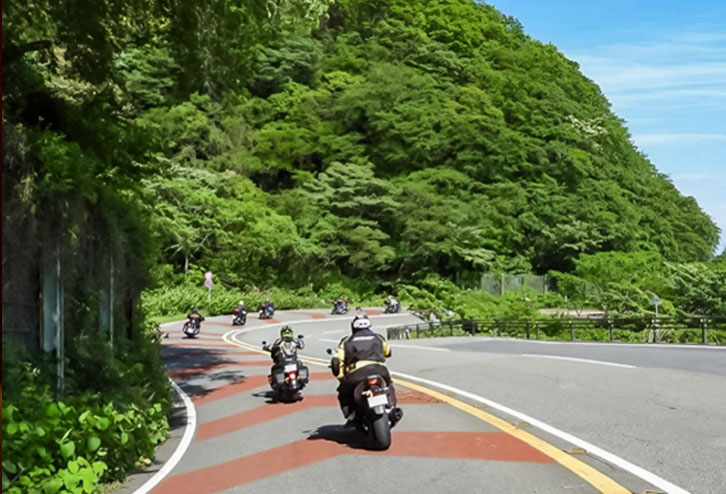
The last rider on the winding road to Ito is Emilio, a local travel agent, and before him, a 79-year-old active rider!
Firstly, we spoke with Miwa Harada, President and Director of the company (“Ms. Harada”), about the impetus behind the establishment of MOTO TOURS JAPAN Co.
“Against the backdrop of the Japan National Tourism Organization’s (JNTO) aggressive promotion of inbound tourism, from around 2016 we began to receive an increasing number of requests from customers of our motorcycle rental business, Rental 819, for spectacular motorcycle tours around Japan.
At first, the requests were only for motorcycle rentals, but in November 2016, we launched MOTO TOURS JAPAN Corporation, a travel company specializing in motorcycle tours, in order to respond to derived requests such as route proposals, securing accommodations, and requests for dispatching attendants with interpreters.”
Japan is the world’s number one producer of motorcycle manufacturers, with four of the world’s largest motorcycle manufacturers, and is the so-called “holy land of motorcycles”.
It seems that the view that touring Japan by motorcycle, and experiencing its nature and culture is gaining popularity as a superb form of adventure tourism for motorcycle enthusiasts.
The travel routes are on an order of magnitude larger scale!
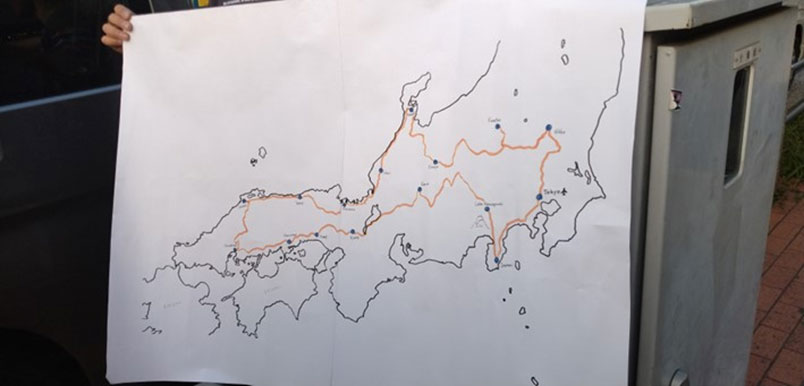
This time, I was able to accompany one of the longest tours among the many motorcycle tour projects.
It was a spectacular route that took us almost halfway across Japan, departing from Rental819 Odaiba on May 9th and took us from Tokyo to Kawaguchiko, Gero Onsen, Kyoto, Himeji, Okayama, Hiroshima, Izumo Taisha Shrine, Tottori, Maizuru, Fukui, Nanao, Hirayu, Kusatsu, Nikko and back to Tokyo, in 19 days returning on May 28th.
We asked Ms. Harada how this route was decided upon.
“Normally, when deciding on a route, we first ask the client about his/her desired time period and places that he/she would like to visit. We then ask about the client’s age group and what they are looking for in a trip. Next, we make a proposal based on that information, including the tourist content and the distance to be travelled each day.
EMILIO SCOTTO WORLD TOURS, the company which gathered participants locally (overseas) this time, is a company that offers tours for about three weeks in May (three weeks after Golden Week), which is the best season for tours around the world, We have chosen the best route to connect the highlights of sightseeing in Tokyo, Kyoto, Hiroshima, Noto, Takayama, etc. and decided on a plan.”
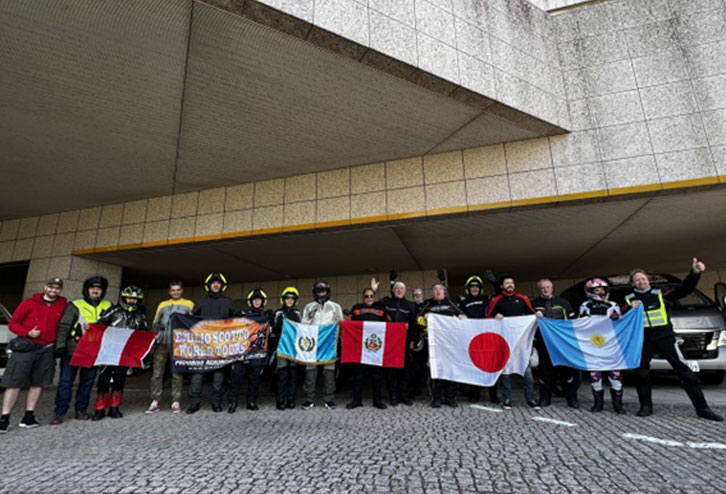 Local travel agents brought together a diverse group of riders from South America and Europe, including couples, parents and children, and solo riders
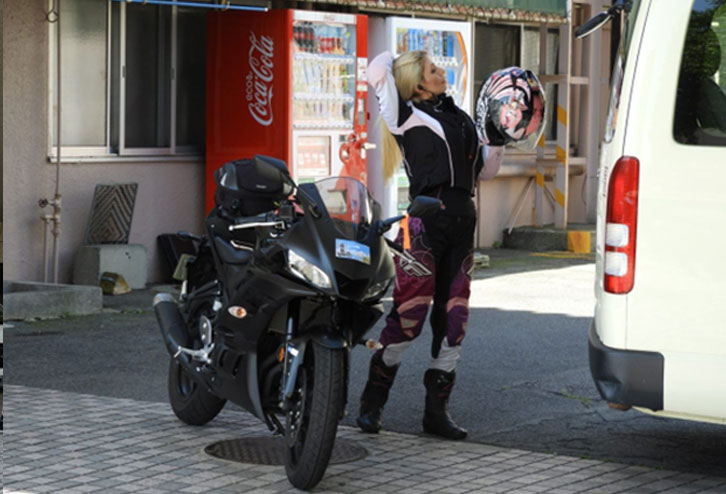 Some of the female riders were wearing solid riding clothes and riding 250cc sport models
There were a total of 14 bikes, mostly large-capacity models. By country, all riders were from Spanish-speaking countries such as Argentina, Peru, Guatemala, Venezuela, Catalunya and Spain, which made the language barrier difficult to communicate with them in English, or even to get their impressions.
What is the appeal of Japan motorcycle tours from the point of view of foreigners visiting Japan?
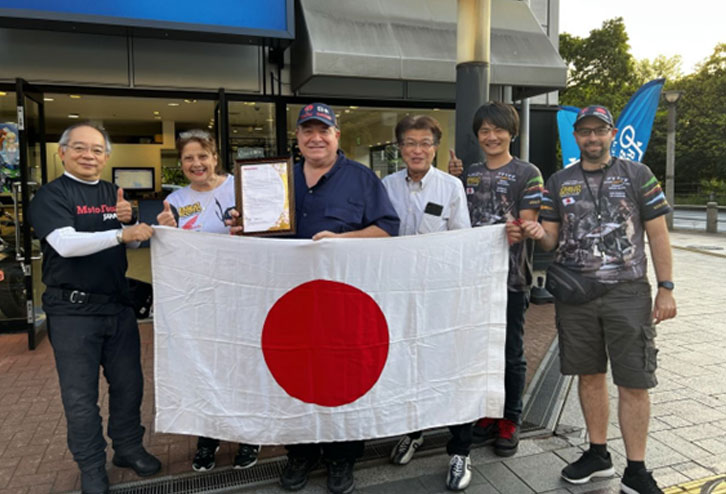
Emilio, a representative of a local travel agency, visiting Japan for the first time in 30 years.
Mr. Emilio Scott, who has been travelling by motorcycle for more than 30 years, is the Guinness World Record holder for having visited 279 times in the 10 years from the mid-1980s to the mid-1990s.
Mr. Scotto’s experience of riding around the world for 10 years had helped him to create a detailed and enjoyable plan.
We asked Emilio to reflect on this tour, reminiscing about his previous visits to Japan.
 Recalling his previous visits to Japan, Emilio reflected on this tour.
“My previous impression of Japan was not so much that it was closed, but that it was not very accustomed to foreigners. I felt this in all situations, for example, when entering a restaurant or staying at a hotel. This time, visiting Japan for the first time in a long time, I was surprised in many situations.
It was truly an “Amazing” experience to ride a motorcycle in a safe and comfortable environment, with four-wheeled drivers who strive to drive safely and well-maintained roads.
What was even more uplifting was that, although it may depend on the time of year and location of my visit, I had a strong image of Japan as a very flat country with little greenery when I visited before, but this time I saw greenery everywhere I went, and it was beautifully landscaped, whether in the city or in the mountains. I was constantly amazed by the beautiful scenery, wherever I was riding.
As for hospitality, including accommodations, food, water, electricity, beds, and tables were all comfortable. From a business perspective, I could see how the Japanese provide an unparalled customer service experience to their customers.
The most surprising thing was that a middle-aged woman who happened to be sitting next to me during the tour saw the T-shirt I was wearing with the Argentine flag printed on it and said, “Soccer? Messi?” I was amazed at how much 30 years can change a person and a country.”
It seems that Japan (Japanese people) have become much more flexible and accepting of different cultures through sports, travel, and cultural exchanges as well as diplomacy between countries.
What is the charm of Japan that you notice when you are told?
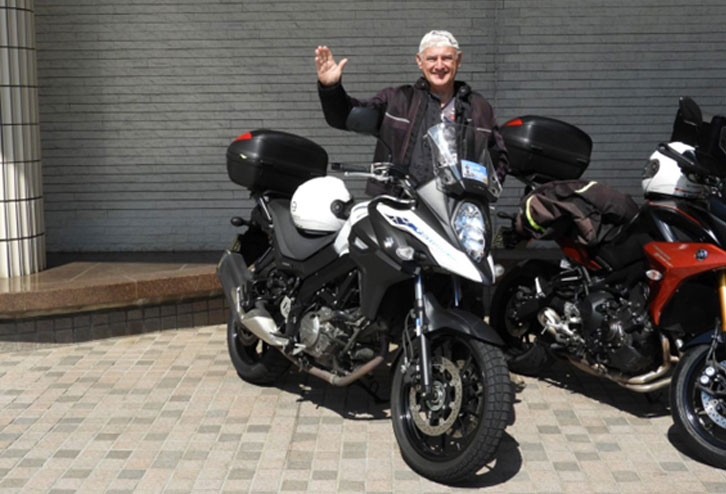
In addition to Mr. Scotto and his wife, one of the customers, Mr. Oscar Gioino was the other person we spoke to in English. Since we were able to keep in touch with him several times after his return to Japan, we asked him about his impressions of the tour. He is actually quite a motorcycle enthusiast himself, and he told us about his relationship with motorcycles.
“I was born in Argentina in 1958 and am a descendant of Italian immigrants. I am a Certified Public Accountant and work in foreign trade. My interest in motorcycles started long ago, when I bought my first used Suzuki 350 18 years ago and my dream came true. Since then I have never given up riding motorcycles and still own a Yamaha FZ6-N 600cc, a Harley Davidson XL1200X (Roadster) and a Honda CRF1000L MT (Africa Twin).
Motorcycles are not only a pleasure to own or ride, but also everything that happens while riding. For example, the wind, the rain, the friends you ride with, the communication with other riders you meet along the way, and the communication with people you hope to one day ride motorcycles with, all of these things are a joy that I can continue to enjoy.
When I board an airplane to return home from an overseas trip, I always have my helmet in my hand, which some people seem to find odd: “Why do you have your helmet with you when you fly?” Some people seem to think it strange.
The question I am often asked is a given: “Where is your motorcycle? Where is your motorcycle? Where is your bike?”
When I explain why, they all ask for my Facebook or Instagram URL!
Little by little each year, I learn what kind of rider clothing, rider boots, rain suits, helmets, gloves, etc. are available for each occasion, what new features each has, and how to use them well. You also learn motorcycle travel tips to make sure you don’t forget or drop anything while riding”.
For them, everything they see is an exciting memory.
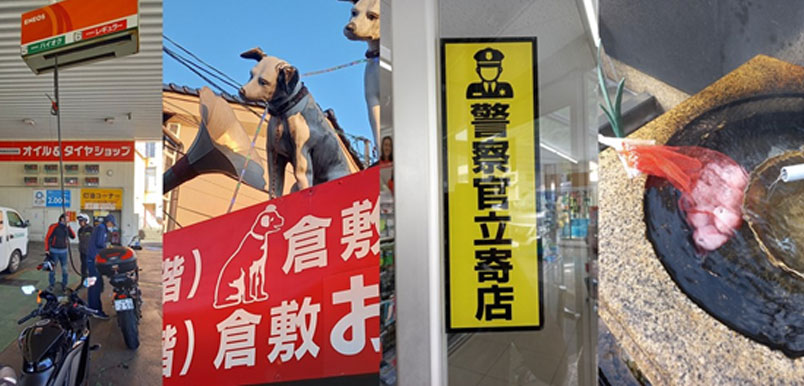
Mr. Gioino’s camera recorded views that he had never seen before. We were told that there were about 2,000 pictures, but we would like to share a few of his selections with you.
- The gas pump hanging from the ceiling must be running out of tight space?
- The hotel was equipped with a coffee machine, but by contrast, what an old-fashioned line phone on the floor!
- The hotel receptionists, two to four in number, were warmly hospitable. Moreover, I was very happy that they all applauded me when I departed!
- There was a huge two-story bicycle parking lot near the station
- The cabs use a white lace cover over the black back seat. Is this part of the clean Japanese culture?
- All cars, trucks, and motorcycles are clean and waxed, even if it rains all day!
- The eggs are cooked in a fountain of boiling water. Is this water hot spring?
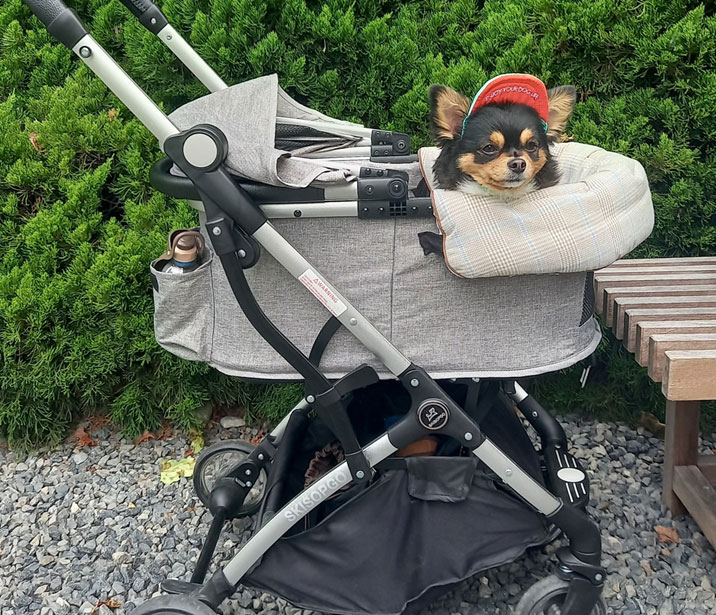
- The dog was in a stroller. Does that make it a walk?
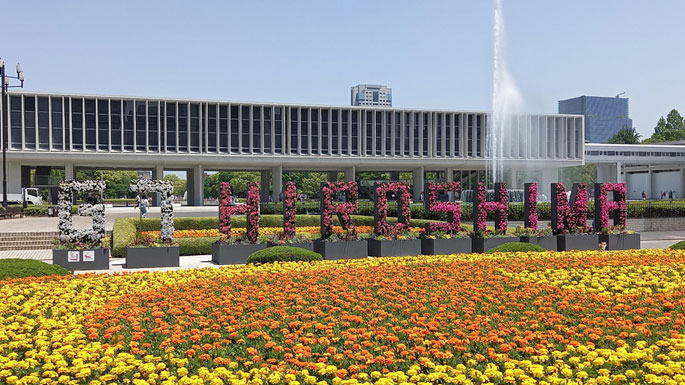
- At the Hiroshima Peace Memorial Museum, we were not able to learn about the causes of Japan’s entry into the Great War.
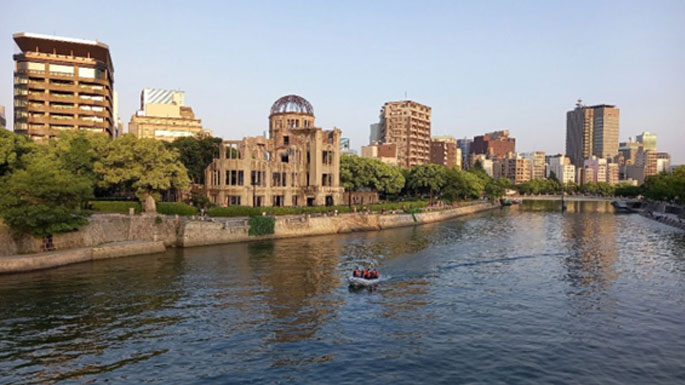
Although my stay was short, only 2 hours, I felt a strong desire to make sure it never happened again!
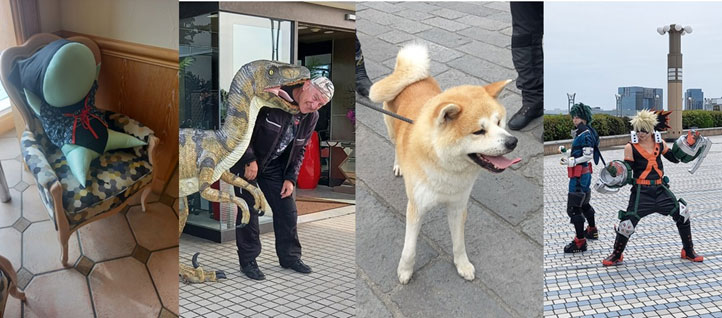
- SARUBOBO. No need to explain.
- Honda Collection Hall and Mobility Resort Motegi, this was great!
- How cute is that Akita dog! And friendly too!
- Tokyo on Sunday morning, young people who looked like teenagers were wearing manga character disguises!
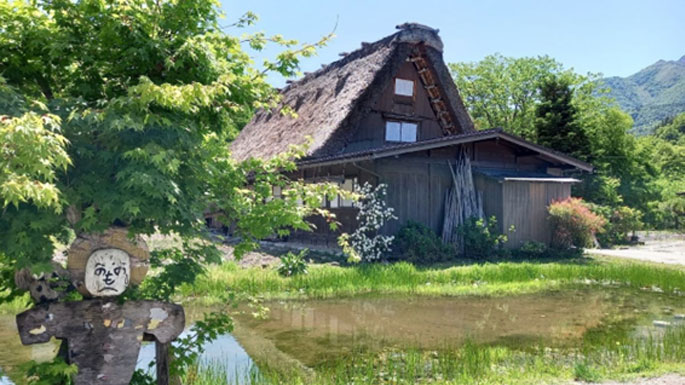
- No flies or mosquitoes anywhere you go! And yet the water in the rice fields is strangely clean!
- There are no bugs or scratches on my helmet or clothing that I would get when running in my own country!
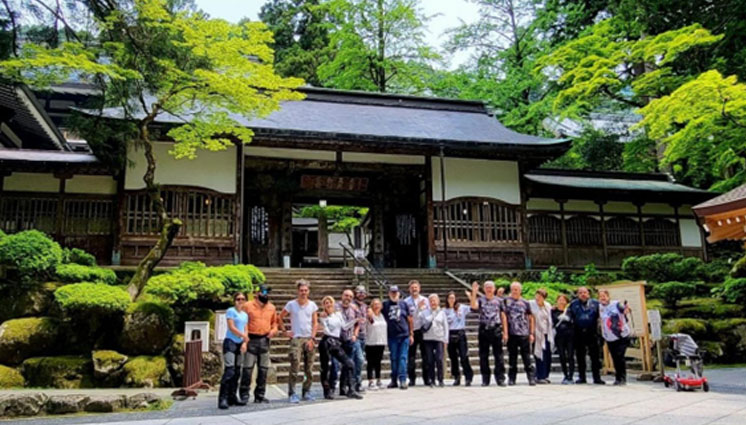
- Tea ceremony, katana production process, hand-applied lacquer on wooden tableware, Japanese sake, sushi. All is so wonderful!
- Japanese rider waving to me from oncoming traffic
- I was a bit startled by the earthquake experience.
Each one of these things remains in our memory.
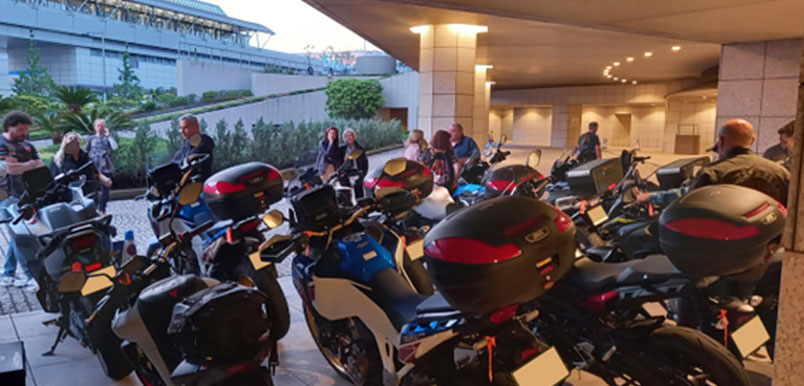
This group was large, with 14 motorcycles. It was difficult to keep them all in the same lane, and even more difficult to keep them all on the highway. It was even more difficult to keep track of everyone, and even more difficult to keep them on the highway. Since it was difficult to track one person by GPS or to stop and ask someone in time, all participants were asked to have the address of the next hotel, and since people and vehicles were everywhere, sometimes they had to ask experienced riders.
However, the country of Japan is widely known throughout the world for its excellent vehicle design and manufacturing quality, and they had no problems with their bikes on the road.
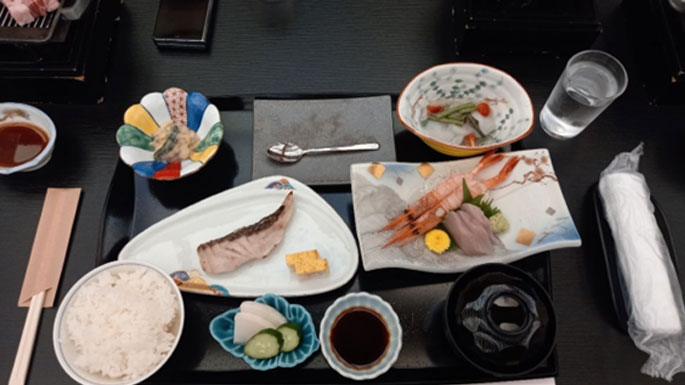
He sometimes wondered along the way if the unique Japanese culture, the exquisite flavors of Japanese food, and the gentle and charming Japanese people might have guaranteed a successful trip.
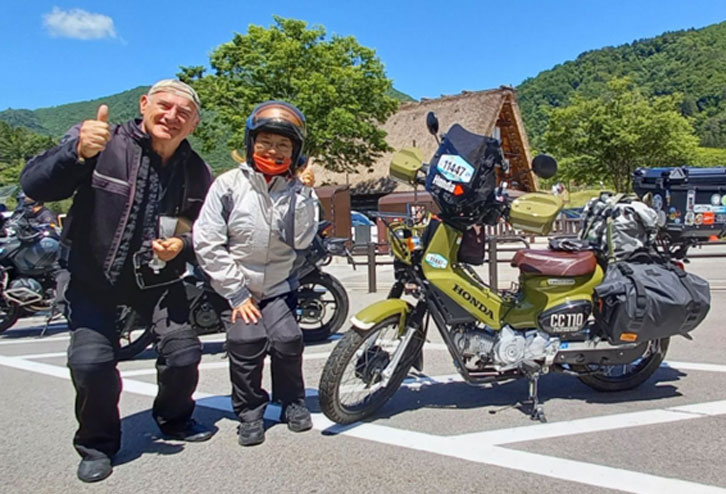
Oscar said that this seemingly obvious thing to the Japanese, the reliability of the bikes and hospitality, may have been one of the most important motivators for us in choosing an enjoyable vacation destination.
The first time I became interested in Japan was in a high school geography class.
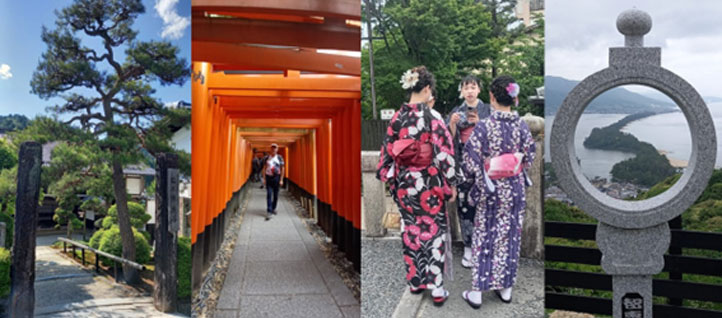
Oscar also told us about how he became interested in Japan.
“When I was a high school student in the 1970s, I had to research one country for a geography class and present it to my classmates.
There was no Internet at the time, so I decided to gather information by writing a letter to the Japanese Consulate in Buenos Aires. I still remember that a large envelope filled with printed photos and information then arrived at my house. The most memorable photo was an aerial view of the Shinkansen bullet train running and Mount Fuji towering in the distance.
Imagine how I felt when I was able to visit Japan this time and saw with my own eyes the true symbol of Japan, Mt. Fuji, when I was driving my motorcycle and suddenly a scene similar to the one in the photo filled my field of vision. It was a flashback to the first time I saw an aerial photograph of Mt. Fuji and the Shinkansen bullet train in the 1970s.”
It was a long but short motorcycle trip to Japan. Oscar and the other participating riders all expressed their gratitude to Japan and its people for giving them the pleasure of travelling.
The beauty of Japan, which was once again recognized from a foreigner’s point of view, is that roads and streets are well maintained, everywhere you go is hygienic and clean, and accommodations provide high quality service. We Japanese should be more appreciative of these “normal” things in Japan.
It is because of the existence of motorcycles that I was able to get acquainted with people from countries right behind Japan on the globe and have conversations with them to share the fun of travel.
Perhaps social networking sites such as those of foreign visitors to Japan who have experienced motorcycle tours in Japan will help us to have a motorcycle trip that will make us aware anew of the wonders of Japan, which we tend to overlook.
________________________
Source MTOINFO: The forefront of the massive motorcycle tourism market